Categories
IVF

Best IVF doctor in Tanzania

The best IVF doctor in Tanzania:


A guide to choosing the right doctor

Infertility is a challenge faced by many couples worldwide, but advances in medical science such as in-vitro fertilization (IVF) treatments have brought hope again. The demand for IVF in Tanzania has soared, and it has brought more specialists and improved clinics to childbirth. There are some detailed guidelines to help.


Why IVF treatment in Tanzania?

Tanzania has significantly improved in healthcare, particularly in maternity care. The country has the best hospitals with the latest technology and compassionate care, making it a sure destination for IVF treatment. Also, the cost of IVF services in Tanzania is relatively cheap compared to other countries, hence being a sure destination for couples facing infertility.


Characteristics of a good IVF therapist

The following factors are important to consider when searching for the best IVF doctor in Tanzania.

  • Experience and Testimonials :- A qualified IVF practitioner should have extensive experience in fertility medicine and demonstrate a history of successful treatment. In addition, they must be certified and associated with respected medical boards.
  • Specialized Training:- IVF is a complex process that requires specialized training. Make sure the practitioner has expertise in assisted reproductive technology (ART).
  • Empathy and communication:- Infertility can be an emotional journey. A good IVF doctor will give you the care you want, listen to your concerns, and explain the treatment process clearly.
  • Advanced Features:- A doctor’s clinic should be technically equipped and on international standards of hygiene and care of the patient.
  • Patient feedback or reviews are normally positive:- In evaluating the success of a doctor, one must consider online reviews and testimonials from other patients.


Steps to start your IVF journey

  • Trust yourself :- Schedule a consultation with the IVF practitioner of your choice to discuss your medical history and fertility goals
  • Conduct a fertility test :- A thorough and comprehensive examination will help the doctor to identify the cause of infertility and make appropriate treatment plans.
  • Understand the process :- The doctor will guide you through the IVF process, including uterine stimulation, egg retrieval, pregnancy, and embryo transfer.
  • Prepare yourself physically and emotionally :- IVF is a very complex process. Therefore, it requires a strong support system and maintaining a healthy lifestyle.

Conclusion

The best way to make parental dreams come true is to find a qualified IVF doctor in Tanzania. And with the right specialist and hospital, the journey should be full of hope and possibility. Just do thorough research, ask questions, and don’t forget your feelings during the decision-making process. Parenting shouldn’t just be about advice after all!
Categories
Female Infertility

Fresh Embryo vs Frozen Embryo Transfer in IVF

Fresh Embryo vs Frozen Embryo Transfer in IVF

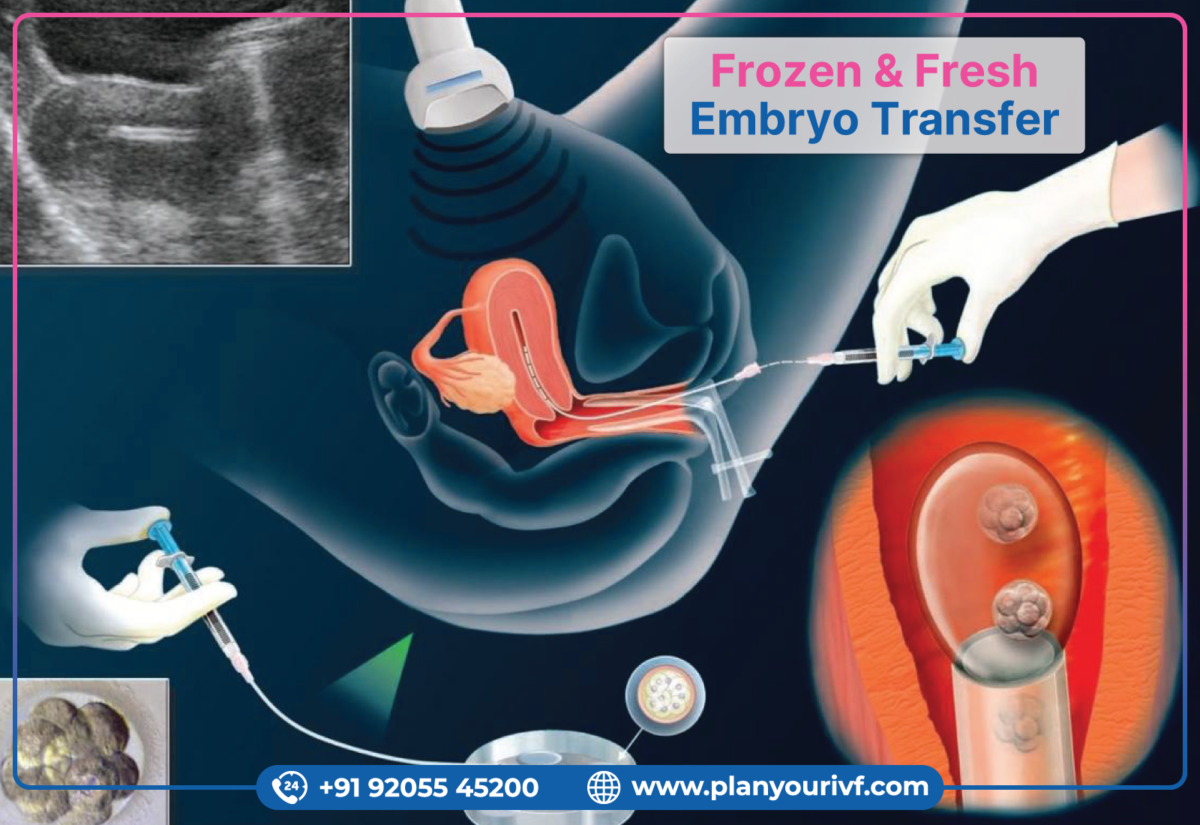
In IVF, embryo transfer can be done either immediately after fertilization (fresh transfer) or after freezing and storing embryos for later use (frozen transfer).

Fresh Transfer:

In the world of In Vitro Fertilization (IVF), a fresh transfer is like the express route to starting a family. After the eggs are collected and mingled with sperm in the lab dance, the resulting embryos are swiftly placed into the uterus. It’s like nature’s plan unfolding in real-time, all within the same cycle as the egg retrieval. This is great for those with a healthy uterus and regular menstrual cycles.

Benefits of Fresh Transfer:

  • Speedy Journey: Mimics the natural process, everything happens in one go.
  • Quick Decision: No waiting – embryos go into the uterus soon after fertilization.

Frozen Embryo Transfer:

Now, imagine a more laid-back, planned approach – the frozen embryo transfer. After the exciting egg collection and fertilization fiesta, embryos take a break; they’re frozen for future use. When the time is right, they thaw and delicately make their way into the uterus during a different cycle. This frozen strategy allows the body to recover from the initial IVF process and offers flexibility in timing, making it suitable for those with irregular menstrual cycles or for additional testing on embryos.

Benefits of Frozen Embryo Transfer:

  • Recovery Time: Gives the body a break, allowing it to recover after the initial egg retrieval.
  • Flexibility: Timing is on your terms, providing a more relaxed and planned approach.
  • Testing Opportunities: Offers a chance for extra checks on the embryos if needed.

The Process:

  • Fresh Transfer: Embryos are transferred into the uterus immediately after fertilization during the same cycle as egg retrieval.
  • Frozen Transfer: Embryos are frozen after fertilization and stored. When ready, they are thawed and transferred into the uterus during a separate cycle.

Choosing between fresh and frozen transfers depends on the individual’s health, specific medical conditions, and treatment goals. Fertility specialists consider various factors to determine the most suitable approach for each patient, optimizing the chances of a successful pregnancy.

Are you facing infertility problems?
We are here to help you.


Categories
IVF

Blastocyst Culture

Blastocyst Culture

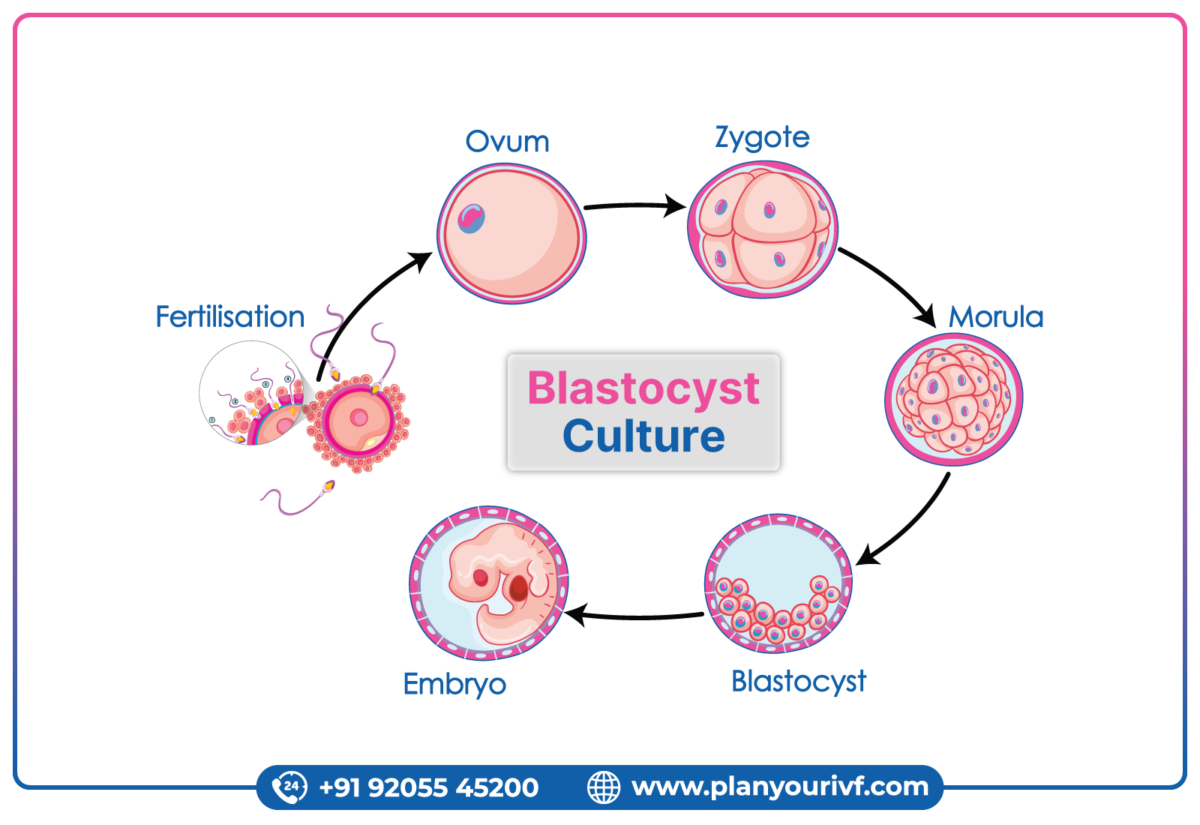
In the world of IVF (In Vitro Fertilization), blastocyst culture is a technique where embryos are allowed to develop for a longer period, typically 5 to 6 days, before being transferred into the uterus.

What’s Blastocyst Culture?

After eggs are collected and fertilized with sperm in the IVF lab, embryos start growing. Normally, embryos are transferred into the womb after about 3 days. But with blastocyst culture, they’re given more time – about 5 to 6 days – to grow until they reach a more advanced stage called the blastocyst.

Process of Blastocyst Culture:

  • Egg Retrieval and Fertilization: Eggs are collected from the woman’s ovaries and fertilized with sperm in the laboratory. After fertilization, these eggs become embryos.
  • Embryo Culture: Instead of transferring the embryos into the uterus after 2-3 days as done in conventional IVF, the embryos are cultured in the lab for an extended period. They are carefully monitored and provided with optimal conditions to support their growth.
  • Selection of Blastocysts: By day 5 or 6, some embryos naturally progress to the blastocyst stage. Blastocysts are more advanced embryos with specialized cell structures, including an inner cell mass and an outer layer known as the trophectoderm. These blastocysts are considered more robust and have a higher chance of implanting in the uterus.
  • Blastocyst Transfer: The healthiest blastocysts are selected for transfer into the woman’s uterus. The number of blastocysts transferred is usually limited to reduce the risk of multiple pregnancies while maximizing the chance of successful implantation and pregnancy.

Benefits of Blastocyst Culture:

  • Better Selection: Not all embryos make it to the blastocyst stage. Those that do are usually the strongest and healthiest ones. So, by waiting a bit longer, doctors can pick the best embryos for transfer, increasing the chances of pregnancy.
  • Natural Timing: In the body, embryos naturally reach the blastocyst stage before implanting into the womb. So, by waiting, we’re just following nature’s plan more closely.
  • Reduced Risk of Multiples: By transferring fewer but high-quality blastocysts, the risk of multiple pregnancies like twins or triplets is lower compared to transferring several embryos at an earlier stage.

In a nutshell, blastocyst culture gives embryos a bit more time to grow into strong, healthy blastocysts before they’re transferred into the womb. It’s like giving them a head start on their journey to becoming a baby, and that’s something pretty amazing in the world of IVF.

Categories
IVF

Traditional Fertilization vs. Modern ICSI

Traditional Fertilization vs. Modern ICSI


Traditional Fertilization

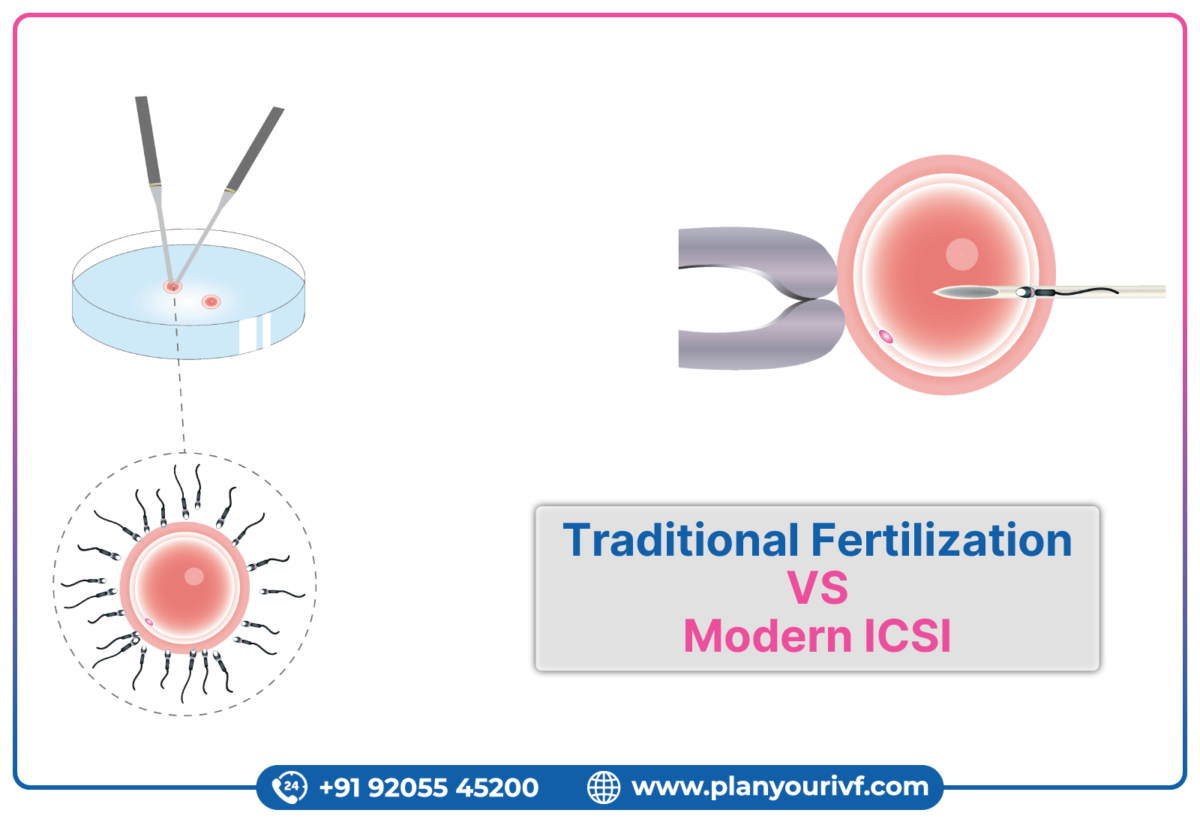
Traditional fertilization, also known as conventional IVF (In Vitro Fertilization), involves mixing eggs retrieved from the woman with sperm in a laboratory dish and allowing fertilization to occur naturally. This method has been a mainstay in assisted reproduction for decades and remains a reliable option for many couples.

Benefits of Traditional ICSI:

  • Proven Success: Traditional fertilization has a long history of success in helping couples achieve pregnancy, making it a trusted option in assisted reproduction.
  • Simplicity: Traditional fertilization is a straightforward process, requiring minimal manipulation of the eggs and sperm.
  • Accessibility: Many fertility clinics offer traditional fertilization as a standard procedure, making it widely accessible to couples seeking fertility treatment.

Modern ICSI

Intracytoplasmic Sperm Injection (ICSI) represents a modern approach to fertilization in assisted reproduction. With ICSI, a single sperm is directly injected into an egg using precise micro-manipulation techniques. This method is particularly useful in cases of male infertility or when previous fertilization attempts have failed. Modern ICSI techniques incorporate advancements in technology and laboratory procedures, enhancing precision and improving fertilization rates.

Benefits of Modern ICSI:

  • Enhanced Success Rates: Modern ICSI techniques often result in higher fertilization rates and improved embryo quality, increasing the likelihood of successful pregnancy.
  • Precision and Accuracy: Advanced micro-manipulation tools allow embryologists to perform ICSI with greater precision, ensuring optimal sperm-egg interaction.
  • Customized Treatment: Modern ICSI allows for tailored treatment approaches, addressing individual patient needs and optimizing treatment outcomes.

Choosing Between Modern ICSI and Traditional Fertilization:

The choice between traditional fertilization and ICSI depends on various factors, including the underlying cause of infertility, the quality of the sperm, and the recommendations of the fertility specialist. While traditional fertilization is simpler and widely used, ICSI offers enhanced precision and success rates, particularly for couples facing male infertility issues.

In conclusion, both traditional fertilization and modern ICSI are valuable techniques in assisted reproduction, offering hope and opportunity for couples struggling with infertility to achieve their dream of parenthood.

Are you facing infertility problems?
We are here to help you.

Book your appointment today![wpforms id=”56″]

Categories
IVF

What is the difference between Day3 and Day5 Embryos?

What is the difference between Day3 and Day5 Embryos?

What is the difference between Day3 and Day5 Embryos?

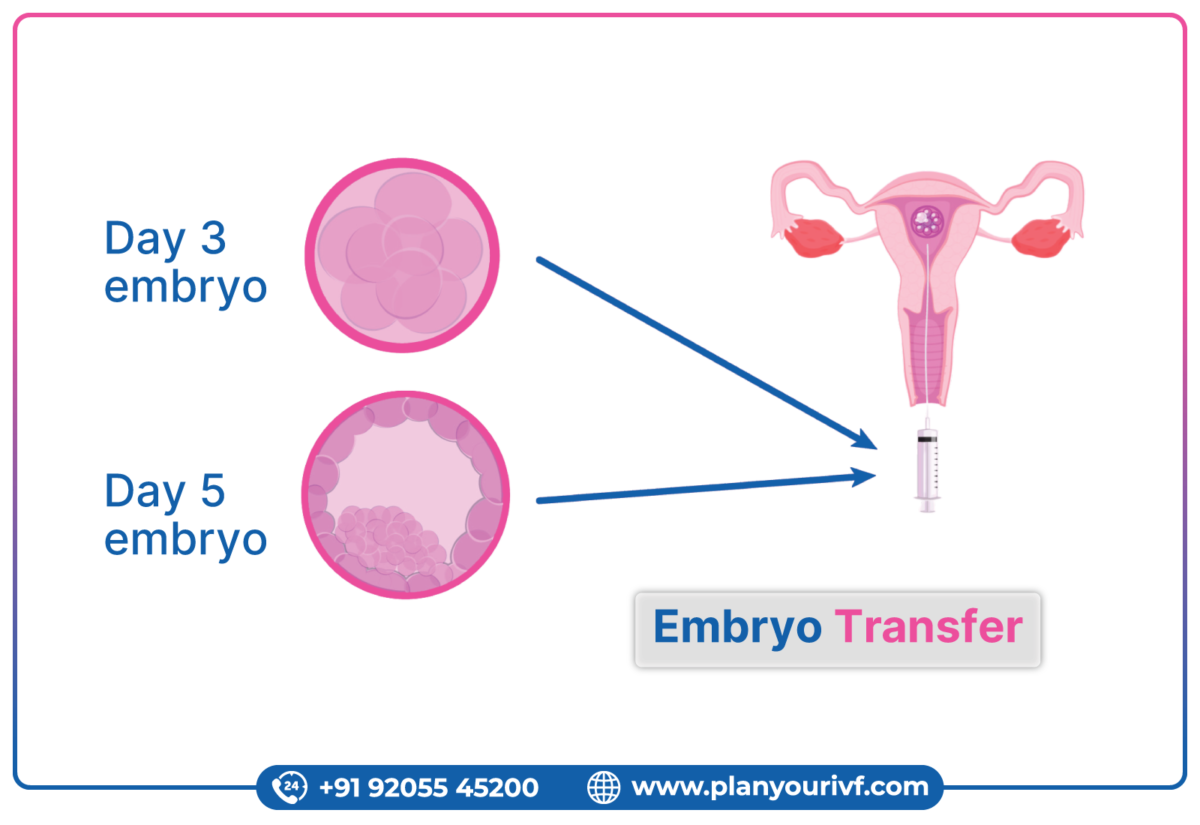
Embryos in IVF are typically cultured for either three days (Day 3) or five days (Day 5) before being transferred into the uterus. Day 3 embryos have fewer cells but can still result in successful pregnancies. They are chosen based on quicker development, making them suitable for certain cases, especially when fewer embryos are available.

On the other hand, Day 5 embryos, also known as blastocysts, have more cells and a more developed inner cell mass. This extended culture allows better selection of high-quality embryos, enhancing the chances of successful implantation. Day 5 transfers also mimic the natural timeline of embryo development in the womb.

The benefits of Day 3 transfers include a quicker decision on embryo quality and the possibility of selecting healthier embryos for immediate transfer. However, the main advantage of Day 5 transfers lies in the ability to identify the most viable embryos, leading to higher success rates and potentially reducing the risk of multiple pregnancies.

Aspect        Day 3 Embryos Day 5 (Blastocyst) Embryos
Development Status          Fewer cells, less advanced development More cells, advanced development (blastocyst)
Selection Criteria Quicker decision on embryo quality Better identification of high-quality embryos
Transfer Timing Immediate transfer after 3 days Delayed transfer after 5 days
Implantation Chances Suitable for certain cases, may result well Higher success rates, better implantation
Risk of Multiples Potential higher risk due to more embryos Reduced risk as only high-quality embryos transferred

Choosing between Day 3 and Day 5 embryo transfer depends on individual circumstances, including the number and quality of embryos available, the patient’s medical history, and the recommendations of fertility specialists. Our specialists provide the best option as per your condition and requirements.

Are you facing infertility problems?
We are here to help you.

Book your appointment today![wpforms id=”56″]

Categories
Female Infertility

Is IVF a Painful journey?

Is IVF a Painful journey?

Is IVF a Painful journey?

Embarking on the journey of In Vitro Fertilization (IVF) is a profound experience that brings with it not only physical considerations but also emotional ones. It can stir up various emotions, and one common concern is whether the procedure is painful. Let’s understand it in simple terms..

IVF involves a series of steps, starting with hormonal injections to stimulate egg production in the ovaries. Some women might experience mild discomfort during this phase, such as bloating or tenderness, but it’s generally manageable.

The next step is egg retrieval, where mature eggs are collected from the ovaries using a thin needle. While the idea might sound a bit scary, the procedure is typically done under anaesthesia to ensure the patient feels no pain. Afterward, some women might experience cramping or mild discomfort, similar to menstrual cramps, but this usually subsides within a day or two.

Fertilization occurs in the lab, and the embryo is then transferred into the uterus. This part of the process is relatively painless, feeling similar to a Pap smear for most women.

As the journey continues with fertilization and embryo transfer, the physical aspects remain relatively painless. However, the emotional toll of IVF can be just as significant. The hope, anticipation, and occasional setbacks can create a rollercoaster of feelings. Each stage brings a mix of excitement and nervousness, forming a unique emotional landscape for every individual or couple involved.

The waiting periods, often a hallmark of the IVF journey, can be emotionally challenging. Waiting for test results, waiting to see if the embryo implants, waiting for that positive pregnancy test – it’s an emotional rollercoaster that requires resilience and support.

The emotional aspect extends to the uncertainty that comes with IVF. Not every cycle results in success, and facing potential disappointments can be emotionally draining. Open communication with your partner and healthcare team becomes essential during these times.

It’s crucial to note that pain is subjective, and what one person finds uncomfortable, another might not. The medical team is there to ensure your comfort throughout the process, and communication is key. If at any point you feel more discomfort than expected, don’t hesitate to let your healthcare team know.

In summary, while IVF involves some discomfort, especially during the egg retrieval phase, advancements in medical techniques and anesthesia make the process manageable for most. It’s crucial not to overlook the emotional journey. Recognizing and addressing both the physical and emotional aspects ensures a more holistic approach to IVF, providing support not just for the body but for the heart and mind as well. The end goal is not only a positive pregnancy test but a well-supported and emotionally resilient journey toward parenthood.

Are you facing infertility problems?
We are here to help you.

Book your appointment today![wpforms id=”56″]

Categories
Female Infertility

Discovering the reality from reels..

Discovering the reality from reels

Discovering the reality from reels..

In a world full of stories and facts floating around, it’s time to uncover the truth about something important: separating the myths from the facts. Today, we’re on a journey to explore the reality behind the myths and facts surrounding a topic that’s sometimes misunderstood. Get ready to join the adventure of discovering what’s true and what’s not!

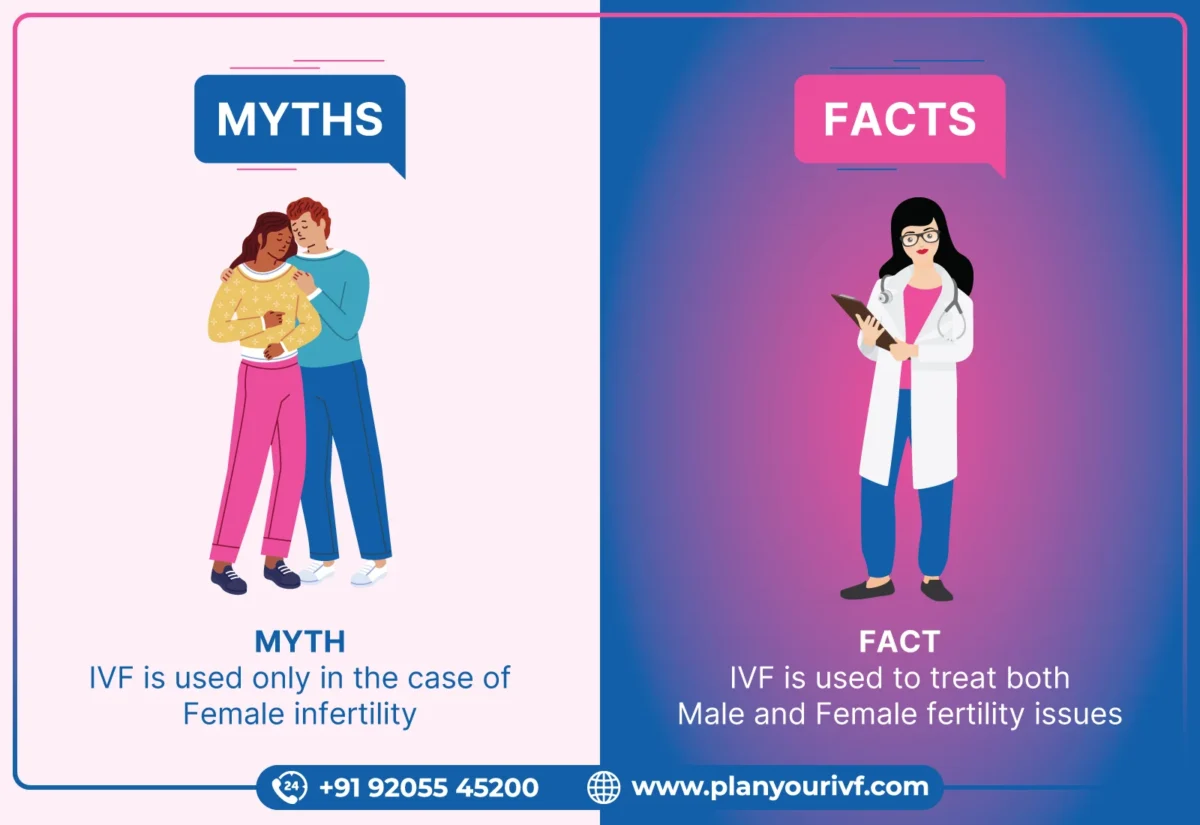
Myth 1:  IVF is Too Expensive

Fact: While IVF can involve significant costs, accessibility has increased globally. Many countries offer various financial assistance programs, and some clinics provide affordable packages, making IVF more accessible to a broader range of individuals.

Myth 2: IVF is Painful and Risky

Truth: It might be a bit uncomfortable, but it’s not unbearable. Doctors plan things carefully to make it as safe as possible. Technology has improved, making the process less invasive.

Myth 3: IVF Always Works the First Time

Truth: IVF success can take a few attempts. Don’t be disheartened if it doesn’t work right away. It’s a process, and each try teaches doctors more about what might work best for you.

Myth 4: IVF Always Results in Multiple Pregnancies

Fact: While multiple pregnancies can occur, modern IVF practices prioritize single embryo transfers to minimize the risk of complications for both the mother and the babies. Careful monitoring and adjustments in protocols contribute to a more controlled approach.

Myth 5: Mixing Gametes of Different Couples is Common in IVF

Truth: Mixing gametes (eggs and sperm) of different couples is extremely rare and highly unlikely in a properly managed IVF clinic. Stringent protocols and identification measures are in place to ensure that each couple’s genetic material remains separate and correctly matched throughout the entire process.

Myth 6: IVF Guarantees a Specific Gender Selection

Truth: Gender selection is not possible through IVF. Many countries, including India, have restrictions on using IVF solely for gender preference. The primary focus of IVF is on achieving a healthy pregnancy.

Myth 7: IVF Babies Have Higher Risks of Health Issues

Fact: Numerous studies have shown that children born through IVF have similar health outcomes as naturally conceived children. Advances in IVF techniques and continuous monitoring contribute to positive health results for both mothers and infants.

Are you facing infertility problems?
We are here to help you.

Book your appointment today![wpforms id=”56″]

Categories
Female Infertility IVF

What is difference between IVF and IUI?

What is difference between IVF and IUI?

What is difference between IVF and IUI?

In Vitro Fertilization (IVF):

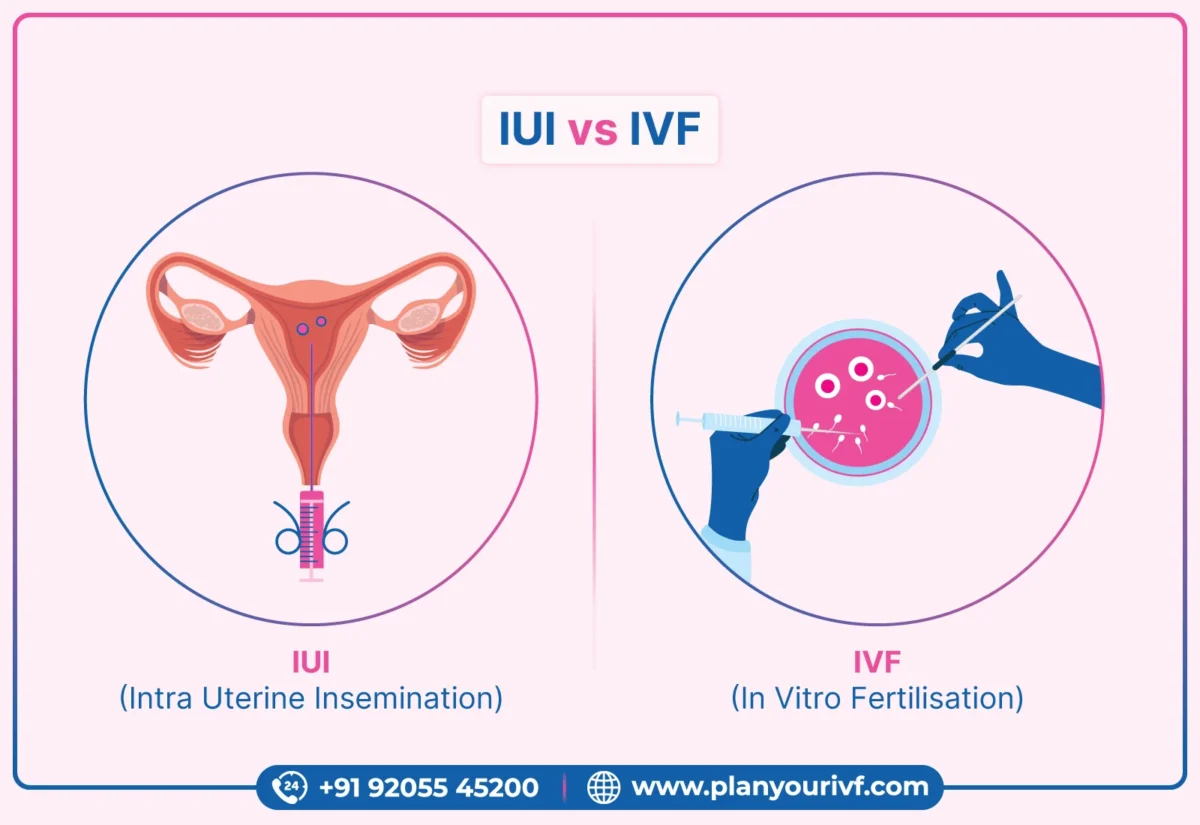
  • What Happens: Eggs are taken from the woman and mixed with sperm in a lab, creating embryos. One or more embryos are then placed in the uterus.
  • When It’s Recommended: If there are complex issues like blocked fallopian tubes, endometriosis, or challenges with sperm, IVF steps in. It’s like the superhero solution for trickier fertility problems.
  • How Much: IVF can be pricier because it involves advanced lab techniques and precise procedures.

Intrauterine Insemination (IUI):

  • What Happens: Think of IUI as a more direct way for sperm to reach the egg. Instead of the usual journey through the cervix, doctors place the sperm directly into the woman’s uterus during her ovulation time, increasing the chances of fertilization.
  • When It’s Recommended: IUI is like a friendly boost for simpler cases, where there might be minor fertility issues or when the sperm needs a little assistance. It’s a gentler approach compared to IVF.
  • How Much: IUI is usually more budget-friendly since it doesn’t involve complex lab work like IVF.

Choosing Between Them:

  • Success Rates: IVF often has higher success rates, making it suitable for more challenging fertility obstacles. IUI, while simpler, might be just right for less complicated cases.
  • Complexity: IVF is a more intricate procedure with lab work and careful embryo placement. IUI is simpler and less invasive, acting like a well-timed fertility helper.
  • Cost: IVF tends to cost more due to its advanced techniques, while IUI is often a more affordable option for those with less complex fertility issues.

So, in fertility terms, it’s like having different tools in a toolbox. IVF is the high-tech tool for big challenges, while IUI is a simpler tool for simpler tasks. Your choice depends on your unique situation, and talking to a fertility expert helps find the best tool for your journey to becoming parents.